
A live improv show is a performance in which actors create scenes, characters, and dialogue in the moment, often using audience suggestions. To choose one well, look beyond the premise: check the format and performers, the venue and accessibility, the show’s tone and audience-participation policy, and practical details such as running time, age guidance, and ticket terms. These factors matter because improv depends on both spontaneous interaction and a specific room, while audience comfort, clear expectations, and the performers’ approach can shape the evening as much as the jokes.
Show format and performer skill shape a live improv show
A show’s format is its organizing structure: it determines how scenes begin, how performers use suggestions, and whether the evening consists of short games, longer scenes, or a connected story. The Upright Citizens Brigade’s description of the Harold, for example, identifies it as a long-form structure that develops multiple scenes and themes from an opening idea. Knowing the format helps you choose between a fast-moving variety show and a more sustained theatrical experience.
Short-form games and long-form scenes
Short-form improv uses compact games with clear rules, quick rounds, and frequent shifts in premise. Long-form improv links scenes or recurring ideas into a larger performance; some long-form shows are fully improvised plays, while others use a recognizable structure such as the Harold. If you are new to improv or want a lively, easy-to-follow night, short-form can be a comfortable entry point. If you enjoy character development and callbacks, a long-form set may be a better fit. These are tendencies, not guarantees: each troupe’s style is different.
Ensemble experience and performance style
Improv skill is not simply the ability to think quickly. Performers listen, accept and build on offers, share focus, and make choices that help scenes progress. The applied-improv organization Improvisation for the Theater, founded by Viola Spolin, emphasizes games and exercises that develop spontaneity, listening, and group interaction. When choosing a show, look for a troupe description, performer biographies, or clips that give you a sense of its rhythm and humor. A polished ensemble may still favor awkward, surreal, or experimental comedy, so assess style as well as experience.
Audience participation and content expectations affect show fit
Audience interaction is one of improv’s distinctive features, but it ranges from simply watching scenes to offering prompts or joining a game. A theater’s event listing or ticket page may explain whether participation is optional, solicited, or central to the format. Checking this in advance is especially useful if you prefer to observe rather than be called on.
How suggestions and participation work
A suggestion is a prompt—often a word, location, occupation, or relationship—that performers use to start or shape a scene. In some shows, the audience gives suggestions from its seats; in others, performers invite a volunteer onstage. Ask or check the listing for the participation policy if it is not clear. A well-run show makes participation understandable and voluntary, rather than making attendance feel like an obligation.
Tone, content notices, and age guidance
Improv can be family-friendly, satirical, edgy, or deliberately adult. Because scenes are created live, the exact jokes and situations cannot usually be predicted, but organizers can still describe the expected tone and provide age guidance or content notices. Review those details before booking, particularly when attending with children or when specific subjects may be uncomfortable. A “clean” label or general rating is useful context, but it cannot guarantee that every improvised moment will suit every audience.
Venue and logistics complete the live improv show experience
A venue affects what you can see, hear, and comfortably enjoy. The National Endowment for the Arts’ Survey of Public Participation in the Arts tracks attendance across live arts events, underscoring that access and practical circumstances are part of cultural participation. For an individual outing, check the theater’s address, seating arrangement, access information, and event details rather than assuming that all comedy rooms offer the same experience.
Sightlines, sound, accessibility, and comfort
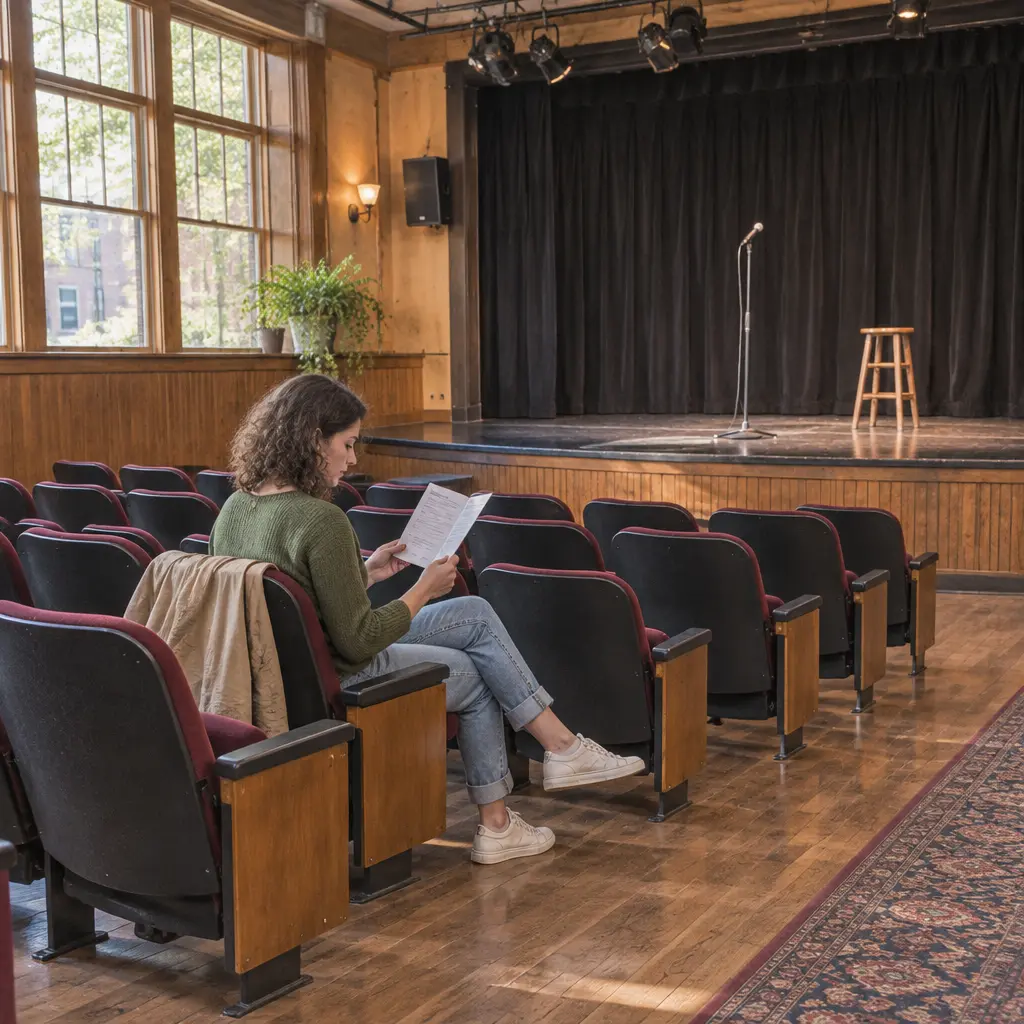
A sightline is the unobstructed view from a seat; in a small theater, pillars, steep seating, or a close stage can make a noticeable difference. Look for seating maps or venue photos, and check whether the room is seated or standing. Contact the venue directly about step-free entry, wheelchair spaces, captioning, hearing assistance, or other accommodations, since facilities vary by location and event. Also consider temperature, seating comfort, and whether food or drinks are permitted.
Running time, ticket terms, and timing
Running time helps you plan transport, meals, and any other evening activities. Check the event listing for the start time, doors-open time, intermission, late seating rules, and whether the ticket covers an opener or multiple sets. Review fees, refund or exchange policies, and age restrictions before purchase. If the event is part of a festival or includes several troupes, confirm which performers and format are scheduled; lineups can change.
A practical checklist helps you choose a live improv show
The best choice is the show that matches your preferred comedy, comfort with participation, and practical needs. Use the following checklist to compare listings before buying a ticket:
- Format: short-form games, long-form scenes, or an improvised play.
- Performers: troupe background, experience, and examples of their style.
- Audience role: whether suggestions are invited and whether volunteers may be called onstage.
- Tone: genre, expected content, age guidance, and any content notices.
- Venue: seating, sightlines, sound, accessibility, and location.
- Logistics: running time, start time, late seating, ticket fees, and refund terms.
For example, someone attending a first improv show with a teenager might prioritize a clear age recommendation, optional audience participation, and a short-form format. A returning fan might instead choose a troupe known for long-form storytelling and a venue with a good view of the stage. In either case, reading the organizer’s event description and contacting the venue about unanswered questions is more reliable than judging by the word “improv” alone.
Conclusion: choose a live improv show that fits your evening
A satisfying live improv show is a match between format, performer style, audience expectations, and venue conditions. Compare short-form and long-form approaches, check how participation works, review tone and age guidance, and confirm accessibility and ticket logistics. Before booking, read the current event listing and contact the theater if important details are missing; that small step can help turn an unpredictable performance into a well-chosen night out.
Sources: Upright Citizens Brigade, The Harold, https://ucbcomedy.com/; Viola Spolin, Improvisation for the Theater, Northwestern University Press, https://www.nupress.northwestern.edu/9780810140080/improvisation-for-the-theater/; National Endowment for the Arts, Survey of Public Participation in the Arts, https://www.arts.gov/impact/research/arts-data-profile-series/adp-29; ADA National Network, Accessibility Resources, https://adata.org/