
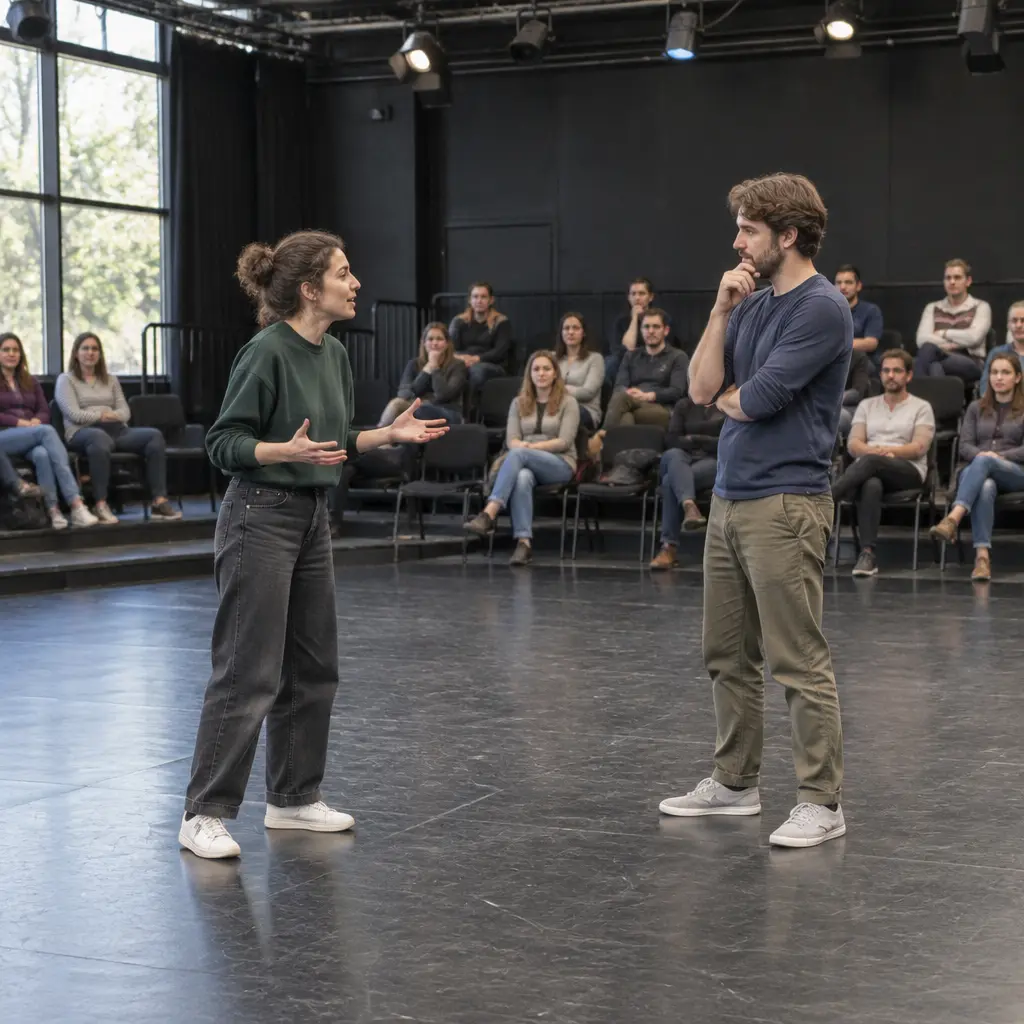
An improvisational theatre show is a live performance in which actors create scenes, characters, and dialogue in the moment rather than following a fully scripted play. Expect audience suggestions, quick changes of direction, and a different performance every night; you may be invited to contribute, but participation is usually optional. Knowing how prompts work, how performers collaborate, and what audience etiquette looks like can make the experience more enjoyable. The format is also more than spontaneous comedy: theatre educators and practitioners use improvisation to develop listening, adaptability, and storytelling skills.
How an Improvisational Theatre Show Works
Improvisational theatre, often shortened to improv, is theatre made without a fixed script for the scenes being performed. The Encyclopaedia Britannica describes improvisation in drama as the performance of a scene without a written script, often using a basic situation. In practice, performers may begin with an audience suggestion, a prompt selected by a host, or a premise devised by the troupe. They then build the scene through dialogue, physical action, and responses to one another.
The key distinction is between an improvised scene and a scripted one: performers make choices in real time, while still drawing on rehearsal, shared techniques, and an agreed format. A show may last about an hour or more, but its length and structure vary by venue and company. Some shows consist of short games; others develop a longer story across a set. There is no single universal format, so the host or venue introduction is the best guide to what is planned that evening.
Audience suggestions and participation
An audience suggestion is a prompt that performers use as a starting point, such as a location, occupation, object, or everyday activity. The host may ask for suggestions before the show or during it. Performers might also invite a volunteer to join a brief game, but many formats require no audience participation beyond calling out a suggestion.
If you are asked to offer a prompt, choose something simple and easy to hear. A place, object, or activity usually gives performers room to invent. You can pass if you are invited onstage and do not want to participate. The suggestion is a creative starting point, not a request for the audience member to write the scene or control its outcome.
The “yes, and” principle
“Yes, and” is a commonly taught improv principle: accept the reality or offer established by another performer, then add information that helps develop the scene. It does not mean agreeing with every statement in real life. Onstage, it helps actors listen, avoid shutting down a scene partner’s contribution, and create a shared situation.
For example, if one performer says, “The train is already leaving,” a partner might respond by adding a destination or a reason they are late. The scene advances because both actors treat the initial idea as useful material. This cooperative approach is one reason improvisation is also discussed in theatre education and workplace communication, although the goals and results depend on the specific training or activity.
Common Improvisational Theatre Show Formats
Once you understand that improv is made in the moment, the next thing to expect is variety. Formats differ in how scenes are connected, how long they run, and whether the emphasis is on comedy, narrative, or audience interaction. The following categories are common, but companies may combine them or use their own names.
Short-form games
Short-form improv consists of brief scenes or games performed under clear rules. A game might require actors to speak in a particular pattern, use a word supplied by the audience, or change scenes when a host signals. The constraints give performers a framework and help the audience understand what to watch for.
Because each game is relatively contained, a short-form show can move quickly between different premises and styles. You may see a run of comic scenes rather than one continuous plot. The rules are usually explained before a game begins, so you do not need prior knowledge to follow along.
Long-form scenes and narrative improv
Long-form improv connects multiple scenes into a larger structure. A single suggestion may inspire several characters, locations, or storylines, and performers may return to earlier ideas as the show develops. The result can feel like a play assembled live, though the exact story is not known in advance.
Long-form formats can be comic, dramatic, or mixed in tone. Because recurring characters and themes may emerge over time, small details from an early scene can matter later. The audience is not expected to identify a formal structure; simply follow the relationships and changes as they unfold.
Musical and genre-based improv
Musical improv incorporates songs created during the performance, sometimes with musicians providing live accompaniment. Genre-based shows use conventions associated with a style, such as a mystery, romantic comedy, or adventure. These categories still rely on spontaneous choices, but musical or genre conventions give performers additional material to build on.
For example, a mystery format may introduce clues and suspects, while a musical format may turn a character’s emotion into a song. The specifics vary by troupe, so treat genre cues as playful guidance rather than a guarantee that the story will follow a familiar scripted formula.
What to Expect as an Audience Member
The live nature of improv means the audience is part of the room’s energy even when no one is called onstage. Performers listen for laughter, attention, and reactions, but they still carry responsibility for shaping the scenes. A welcoming venue will usually explain whether suggestions or volunteers are part of the show before the performance begins.
A show that can change direction
No two improvised performances are exactly alike because the dialogue and scene choices are created live. A suggestion may lead to an unexpected setting, a character may take a scene in a new direction, and a moment that seems minor can become important later. This uncertainty is part of the appeal, but it also means not every joke or scene will work equally well for every audience member.
How and when to participate
If performers request suggestions, wait for the host’s cue and call out a concise, appropriate idea. Avoid long explanations or suggestions that rely on private information about someone in the room. If volunteers are invited, participation should be voluntary; you can decline politely or remain seated.
Some venues have age guidance or content notes, and improvised comedy may include adult language or themes. Check the event description if you have concerns. You can also ask the venue about accessibility, seating, or content policies before attending.
Audience etiquette
Laugh and respond naturally, but avoid talking over scenes, using a phone, or shouting unrelated material. If a performer asks for a suggestion, offer one and then let the actors develop it. Respect other audience members’ boundaries, especially if a volunteer is involved, and follow the venue’s guidance about photography or recording.
Why Improvisational Theatre Matters
Improv is entertainment, but its methods also connect to wider practices in theatre and education. The National Theatre’s education resources and applied-theatre programs commonly use practical drama activities to explore communication and creative choices. The precise benefits depend on the setting; a comedy show is not the same as a structured educational workshop, and claims about personal or professional outcomes should be understood in that context.
Listening, collaboration, and adaptability
Performers need to notice what their scene partners say and do, then respond in a way that supports the shared scene. This makes listening visible: a missed cue or ignored offer can change the direction of a scene, while a well-timed response can strengthen it. The audience sees collaboration happen in real time rather than as a finished script.
An example of improv beyond comedy
Applied theatre uses drama techniques in contexts beyond conventional stage entertainment, including education and community work. In such settings, facilitators may use improvisation to explore a situation or rehearse possible responses. These activities differ from a ticketed improv show in purpose and facilitation, but they illustrate how spontaneous scene-making can be adapted to audiences and goals beyond comedy.
Conclusion: Enjoying an Improvisational Theatre Show
An improvisational theatre show is a live, unscripted performance shaped by performers’ choices and, sometimes, audience suggestions. Short-form games, long-form stories, musicals, and genre-based formats offer different ways to experience the same central idea: scenes are created in the moment through listening and collaboration. Expect surprises, follow the host’s instructions, and remember that audience participation is generally optional. To get the most from a show, check its format and age guidance beforehand, arrive ready to pay attention, and let the performers turn the starting ideas into something unexpected.
Sources: Encyclopaedia Britannica, “Improvisation,” https://www.britannica.com/art/improvisation-theatre; National Theatre, “Drama Games and Activities,” https://www.nationaltheatre.org.uk/learning/; Applied Theatre, “About Applied Theatre,” https://www.appliedtheatre.org/